 The UK’s water network is one of the most complex pieces of infrastructure in the country. Hundreds of thousands of kilometres of mains carry drinking water to homes and businesses every single day. Keeping that system running, while also carrying out essential maintenance and upgrades, is a huge challenge.
Water utilities cannot simply turn off the supply every time a pipe needs attention. The pressure to keep water flowing is constant, and that is where specialist pipeline services make a real difference. Techniques such as hot tapping, line stopping, and pipe freezing allow engineers to work on live, pressurised water mains without cutting off supply to the surrounding area.
This article explains how those techniques work and why they are so important to the day-to-day operation of water utility networks across the UK.
Why Water Mains Cannot Simply Be Shut Down
Water mains operate under continuous pressure, typically between 3 and 10 bar. They serve homes, hospitals, schools, and businesses around the clock. Shutting down a section of main to carry out repairs or modifications would mean interrupting supply to everyone connected to that part of the network.
The disruption caused by a planned shutdown can be significant. Residents may be left without water for hours or even days. Businesses that depend on a constant supply, such as food manufacturers and healthcare facilities, face serious operational problems. There is also the cost of draining, isolating, and re-pressurising sections of main, which can run into tens of thousands of pounds.
Live working techniques exist precisely to avoid these problems. They allow engineers to repair, modify, or connect to a pressurised main while it remains in full operation.
According to Water UK, water companies in England and Wales repaired 45,383 burst pipes in 2024-25 alone. With that volume of repair work happening across the country, minimising disruption to supply is a central part of how utilities manage their networks.
Hot Tapping: Making New Connections on Live Mains
One of the most widely used techniques in utility pipeline maintenance is hot tapping. This process allows engineers to create a new branch connection on a live, pressurised water main without stopping the flow.
The method works by welding or clamping a saddle fitting onto the outside of the pipe. A full-port isolation valve is then attached, and a specialist tapping machine drills through the pipe wall while maintaining a complete seal. The cut section, known as the coupon, is safely captured and removed. At no point does the pipeline lose pressure or flow.
Hot tapping is used in the water utility sector for a range of tasks:
| Application | Why Hot Tapping Is Used |
|---|---|
| Adding branch connections | Extends the network without shutting down the main |
| Installing meters or monitoring points | Provides access to the live system |
| Connecting new developments | Ties in new supply pipework to existing pressurised mains |
| Replacing failed valves | Creates access points around a faulty valve |
| Emergency bypass installation | Maintains flow while a damaged section is dealt with |
The technique works on most pipe materials found in water networks, including ductile iron, cast iron, steel, MDPE, and concrete cylinder pipe. This versatility makes it a go-to option for utilities working with older infrastructure, much of which dates back more than a century.
Line Stopping: Isolating Sections for Repair
When engineers need to work inside a section of pipe rather than simply connect to the outside of it, hot tapping alone is not enough. That is where line stopping comes in.
Line stopping creates a temporary seal inside a live water main, isolating a section of pipe so that repair or modification work can take place in a safe, dry environment. The rest of the network continues to operate normally on either side of the seal.
The process works in stages. First, hot tapping is used to create an access point on the live main. A specially designed plugging head is then inserted through the valve into the flowing pipe. When activated, the head expands to form a watertight seal against the pipe wall, stopping all flow in that section. Engineers can then safely cut into, repair, or modify the isolated segment.
Once work is complete, the plugging head is retracted, flow is restored, and the fitting is capped. The entire operation takes place without a full system shutdown.
Water utilities use line stopping for jobs that would otherwise require draining and de-pressurising long sections of main. These include:
- Replacing damaged pipe sections
- Removing blockages or debris
- Installing pig launchers and monitoring equipment
- Carrying out emergency repairs on critical mains
- Making tie-in connections for new infrastructure
Water mains can operate at pressures of 3 to 10 bar, so line stopping equipment must be rated and calibrated to the specific conditions of the pipeline in question. Specialist contractors carry out detailed assessments before any work begins.
Pipe Freezing: Isolation Without Valves
Not every section of water main has an isolation valve nearby. Older networks in particular often lack the valve coverage needed to isolate a specific section for repair. In these situations, pipe freezing offers an effective alternative.
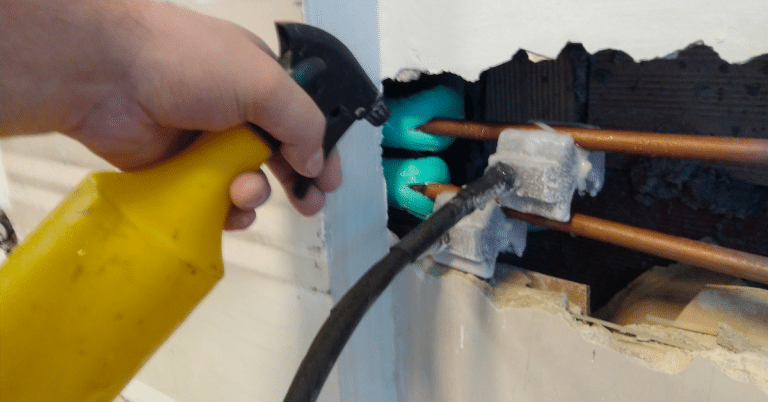
Pipe freezing works by applying a refrigerant to the outside of the pipe at a specific point. This freezes the water inside, creating a solid ice plug that acts as a temporary valve. Engineers can then safely work on the section downstream of the plug, with no flow passing through.
The technique requires no excavation beyond what is already needed for the repair itself. It creates no permanent change to the pipe and leaves no fittings behind. Once work is complete, the plug is allowed to thaw and normal flow resumes.
Pipe freezing is particularly useful in the water utility sector when:
- No suitable isolation valve exists within a workable distance
- An existing valve has failed and cannot be relied upon
- A fast response is needed and there is no time to install temporary fittings
- Work is being carried out in a confined or heavily congested network
The method works on most pipe materials and sizes found in water networks. It is commonly used alongside line stopping and hot tapping as part of a broader isolation strategy on complex or older sections of main.
Pipeline Repair: Keeping the Network Intact
Burst pipes, corrosion, and physical damage to water mains are a routine part of managing a large distribution network. Pipeline repair services cover the full range of work needed to restore a damaged main to full operation, including both planned repairs and emergency response.
When live working techniques such as hot tapping and line stopping are used in combination, it is possible to isolate a damaged section, carry out the necessary repairs, and restore flow, all without a full network shutdown. This approach is now standard practice for utilities managing ageing infrastructure under constant operational pressure.
Why the Water Sector Relies on Specialist Pipeline Services
The scale and complexity of the UK’s water distribution network means that planned shutdowns are rarely practical. Water companies are under increasing pressure from regulators to reduce leakage, maintain supply standards, and upgrade their networks, all while keeping disruption to customers to a minimum.
Specialist pipeline services provide the technical capability to do exactly that. Hot tapping, line stopping, pipe freezing, and pipeline repair work together to give engineers the tools they need to maintain, modify, and repair live water mains without cutting off supply.
For water utilities facing the challenge of managing ageing infrastructure with minimal disruption, these techniques are not optional extras. They are an essential part of how the network is kept running.