 Pipeline freezing is a well-established technique for isolating sections of pipework without shutting down an entire system. Most people associate it with water and liquid-based systems, but what happens when the pipeline carries gas? Can the same method be used safely, and what are the risks involved?
This post answers the most common questions we hear from industrial clients about using pipeline freezing on gas pipelines.
What Is Pipeline Freezing?
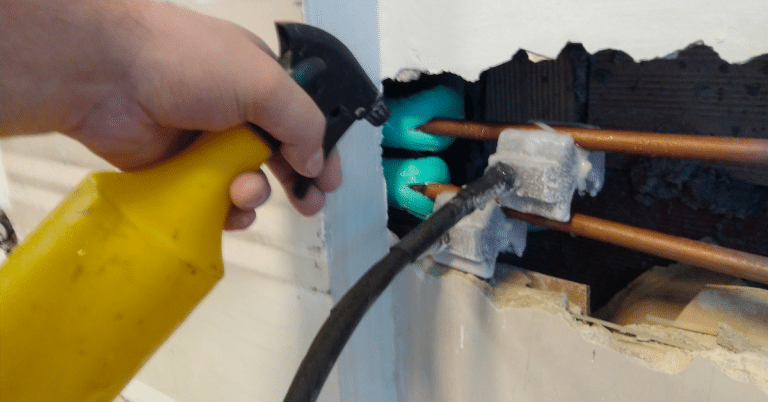
Pipeline freezing is a method of creating a temporary ice plug inside a pipe. A freezing jacket is fitted around the outside of the pipe, and a cryogenic agent (usually liquid nitrogen or dry ice) is applied. This causes the liquid inside the pipe to freeze solid, forming a plug that acts as a temporary isolation point.
Once the work is complete, the plug is allowed to thaw naturally, and the flow is restored without any permanent changes to the pipework.
Can You Freeze a Gas Pipeline?
The short answer is: not with standard pipeline freezing techniques.
Pipeline freezing works by freezing the contents of the pipe into a solid plug. For this to work, the contents must be a liquid or contain enough moisture to form a solid barrier. Gas, by its nature, does not freeze into a solid plug under typical operating conditions. Compressed or liquefied gases behave differently, but standard pipeline freezing equipment is not designed for these applications.
Here is a comparison of how pipeline freezing applies to different pipe contents:
| Pipe Contents | Can Pipeline Freezing Be Applied? | Notes |
|---|---|---|
| Water | Yes | Most common application |
| Heating and cooling systems | Yes | Works well on closed-loop systems |
| Slurries and liquids | Yes | Depends on fluid composition |
| Natural gas (methane) | No | Gas does not form a freezable plug |
| Compressed air | No | Insufficient moisture for a plug |
| Liquefied gas (LPG, LNG) | Specialist cases only | Requires specialist assessment |
| Steam systems | No | Too high a temperature for standard freezing |
Why Is Gas Different from Water?
Water pipelines are a natural fit for pipeline freezing because water turns to ice at 0 degrees Celsius. The process is predictable, controllable, and reversible.
Gas pipelines present a different set of challenges. Natural gas (methane) does not liquify or solidify at temperatures achievable with standard cryogenic agents used in the field. Even when pipelines carry liquefied natural gas (LNG), the extremely low temperatures involved require specialist handling that falls well outside a standard pipe freeze operation.
There is also the question of pressure. Gas pipelines often operate at significant pressure. Applying a freeze plug to a pressurised gas line without proper isolation could create a dangerous pressure differential on either side of the plug, which poses a serious risk to both the pipework and the people working on it.
What Are the Safety and Regulatory Considerations?
Gas pipelines in the UK are subject to strict health and safety legislation. The Health and Safety Executive (HSE) oversees safety standards for pipelines under the Pipelines Safety Regulations 1996. You can read more about how the HSE regulates pipeline maintenance and safety on their pipelines guidance page.
Any work carried out on a gas pipeline must be assessed for risk, planned carefully, and carried out by competent engineers with the right equipment. This includes choosing the correct isolation method for the specific pipe contents, pressure, and operating conditions.
Attempting to apply a standard pipe freeze to a gas pipeline without specialist assessment would not meet these regulatory requirements and could put workers at serious risk.
What Are the Alternatives for Gas Pipeline Isolation?
If pipeline freezing is not suitable for gas systems, what are the options?
Line Stopping
Line stopping is one of the most common alternatives for isolating gas pipelines. It involves inserting a mechanical stopper into the live pipeline through a fitting installed under pressure. This creates a reliable isolation point without the need to drain or freeze the system.
Line stopping works on both liquid and gas pipelines and is a well-proven method for maintenance, repair, and modification work on live systems.
Hot Tapping
Hot tapping allows a new branch connection to be made to a live pipeline under pressure. It is often used alongside line stopping as part of a planned isolation process. For gas systems where work needs to be carried out without interrupting supply, hot tapping combined with line stopping is a common solution.
Valved Isolation
In some cases, the existing valve infrastructure on a gas system can be used to isolate the required section. Where valves are in good condition and properly maintained, this is often the simplest approach.
When Should You Seek Expert Advice?
If you are unsure which isolation method is right for your pipeline, the safest step is to speak to a specialist before any work begins. The correct method depends on several factors:
- What the pipeline carries (liquid, gas, steam, slurry)
- The operating pressure and temperature
- The pipe material, diameter, and age
- The nature and duration of the work being carried out
- Applicable regulations and site-specific requirements
Getting this right at the planning stage avoids costly mistakes, reduces risk, and keeps your operations running as smoothly as possible.
Talk to RDS Pipeline
RDS Pipeline has over 20 years of experience providing pipeline isolation services across the UK, from water and process pipelines to industrial and petrochemical applications. Our team can assess your system and recommend the right isolation method for your specific needs.
Whether that is pipeline freezing, line stopping, hot tapping, or another approach, we will give you clear, practical advice based on what your system actually requires.
Call us today on 01277 500510 or get in touch via our website to discuss your project.